In this blog series, we share practical observations from AI transformation work with organizations that are investing seriously in AI but still struggling to turn that investment into measurable business outcomes.
Across those conversations, the same patterns keep returning: promising pilots that never quite reach production, delivery models that are too narrow for the complexity of AI work, and a lack of internal capability to carry momentum beyond a few enthusiastic teams.
That final point matters more than many organizations expect. Capability does not grow from strategy decks alone. It grows through practical learning, shared language, and people who know how to guide real initiatives. That is also why, where the series touches on training, we point to AI-Native Foundation and AI-Native Value Architect as relevant next steps.
The goal of this series is to make those patterns visible, put words to the friction many leaders are already feeling, and offer a more practical path forward. Not by adding more hype to the discussion, but by focusing on the organizational conditions that make AI initiatives more likely to create real value.
What This Series Covers
- Why so many AI investments stall before they deliver business value
- Why traditional project management is often not enough for AI initiatives
- How to build internal capability that can repeatedly turn AI investments into outcomes
A Hard Truth About Enterprise AI
Most organizations are not losing value on AI because they lack ideas. They are losing value because the organization is not yet set up to carry good ideas all the way to outcomes.
That can be an uncomfortable statement, especially when there is already strong intent, visible investment, and no shortage of activity. But it explains why so many AI efforts feel expensive without feeling transformative. The technology may be promising. The missing piece is often the operating model around it.
That is why this series begins with the value gap, moves into the limits of conventional delivery models, and finishes with the question that matters most over time: how to build an internal capability that actually lasts.
Read the Series
Part 1 — Why So Many AI Investments Fail Before They Deliver Value
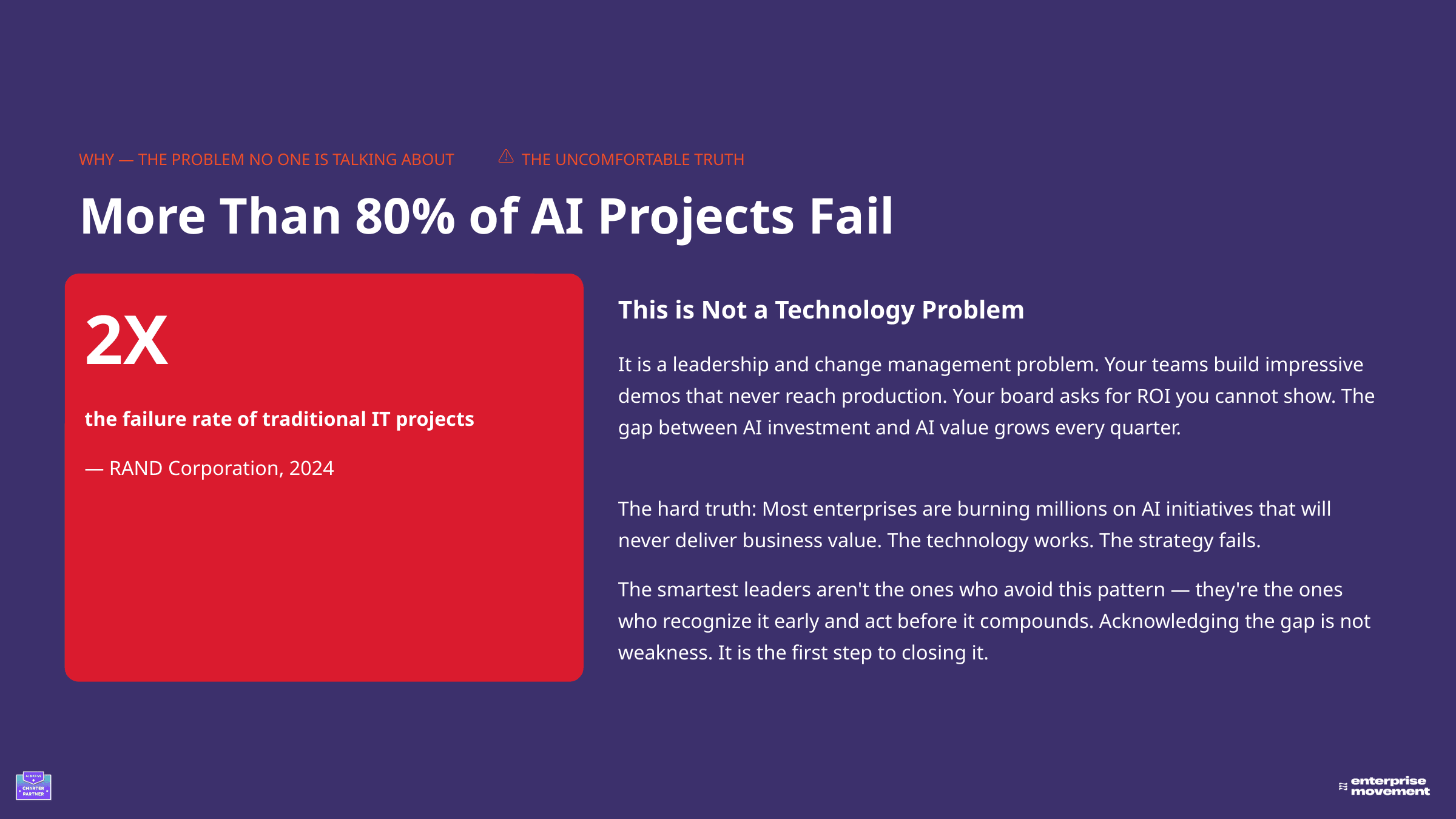
The technology often works. The strategy, alignment, and execution model do not.
We start with the three blind spots that repeatedly destroy AI value: the value gap, the POC graveyard, and the hype trap.
Part 2 — Why Traditional Project Management Fails for AI Initiatives
AI delivery needs more than timelines and status updates.
This article looks at why AI work demands a broader leadership model—one that connects business value, technical decisions, and adoption.
Part 3 — How to Build an Internal AI Capability That Actually Lasts
The goal is not more pilots. The goal is a repeatable internal capability.
We close with a practical three-phase view of how organizations can move from scattered experiments to coordinated value creation.