This is part two of our Stop Wasting Your AI Investments series. In the first article, we looked at the three blind spots that destroy AI value. Here, we focus on why traditional project management is often not enough for AI work.
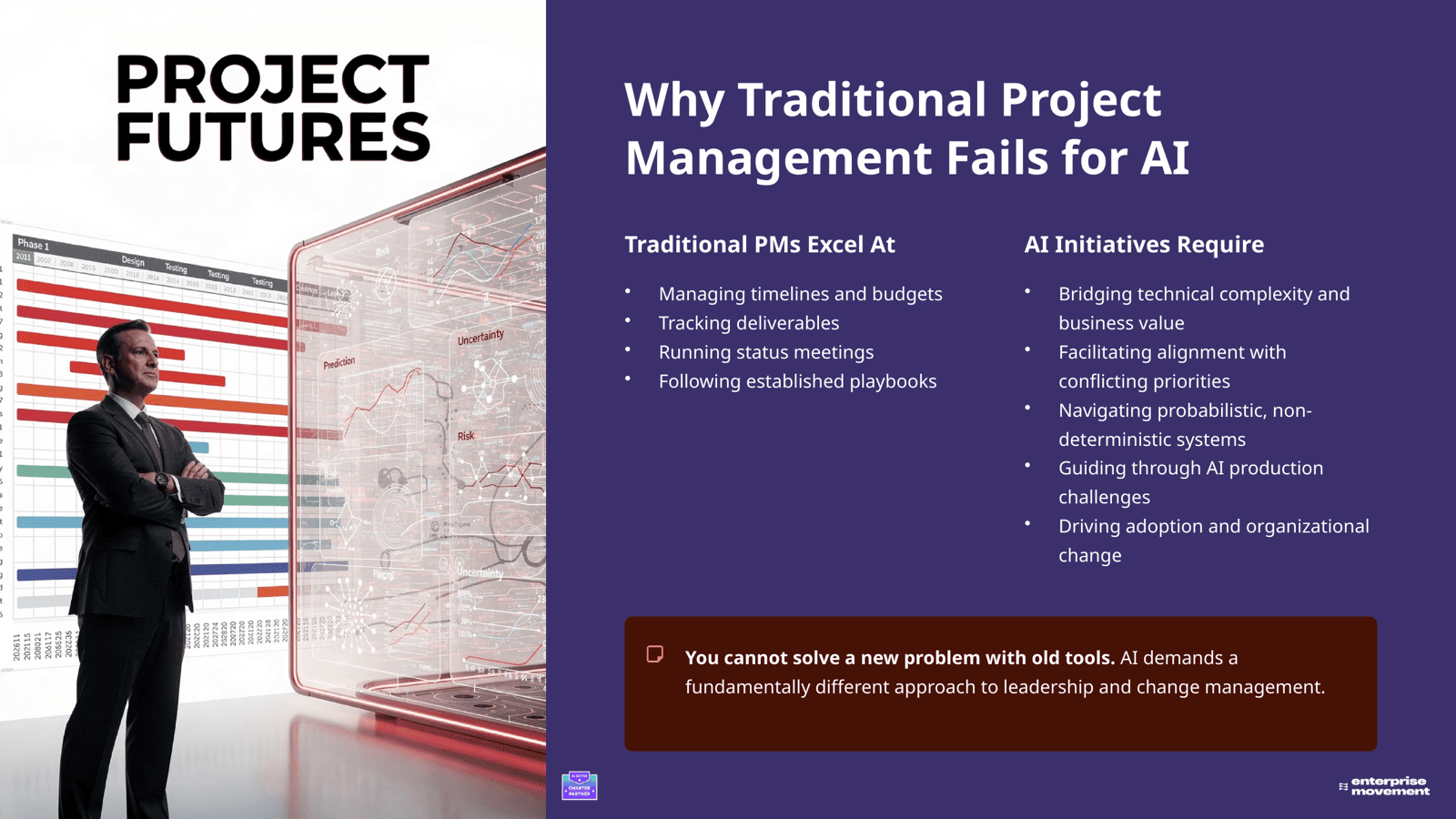
Many organizations already have experienced project managers, delivery leads, and governance structures. So when AI initiatives start struggling, the instinct is understandable: increase oversight, tighten reporting, add checkpoints, and push harder on execution. Unfortunately, that usually does not solve the real problem.
What Traditional Project Management Does Well
Traditional project management brings structure to timelines, dependencies, budgets, milestones, and stakeholder coordination. In environments where deliverables are well understood and requirements are stable, that structure is essential. But AI work rarely behaves that way.
The Real Challenge in AI Delivery
Most AI initiatives fail somewhere between four realities: the business need is not clearly defined, the technical path is misunderstood, production requirements arrive too late, and adoption is treated as an afterthought.
- The business need is not clearly defined
- The technical path is misunderstood
- Production requirements arrive too late
- Adoption is treated as an afterthought
Why AI Needs a Different Kind of Leadership
A traditional project manager is often measured by whether something was delivered on time and on budget. But AI initiatives should be measured differently: did they create business value, gain adoption, survive production reality, and scale?
The Role Most Organizations Are Missing
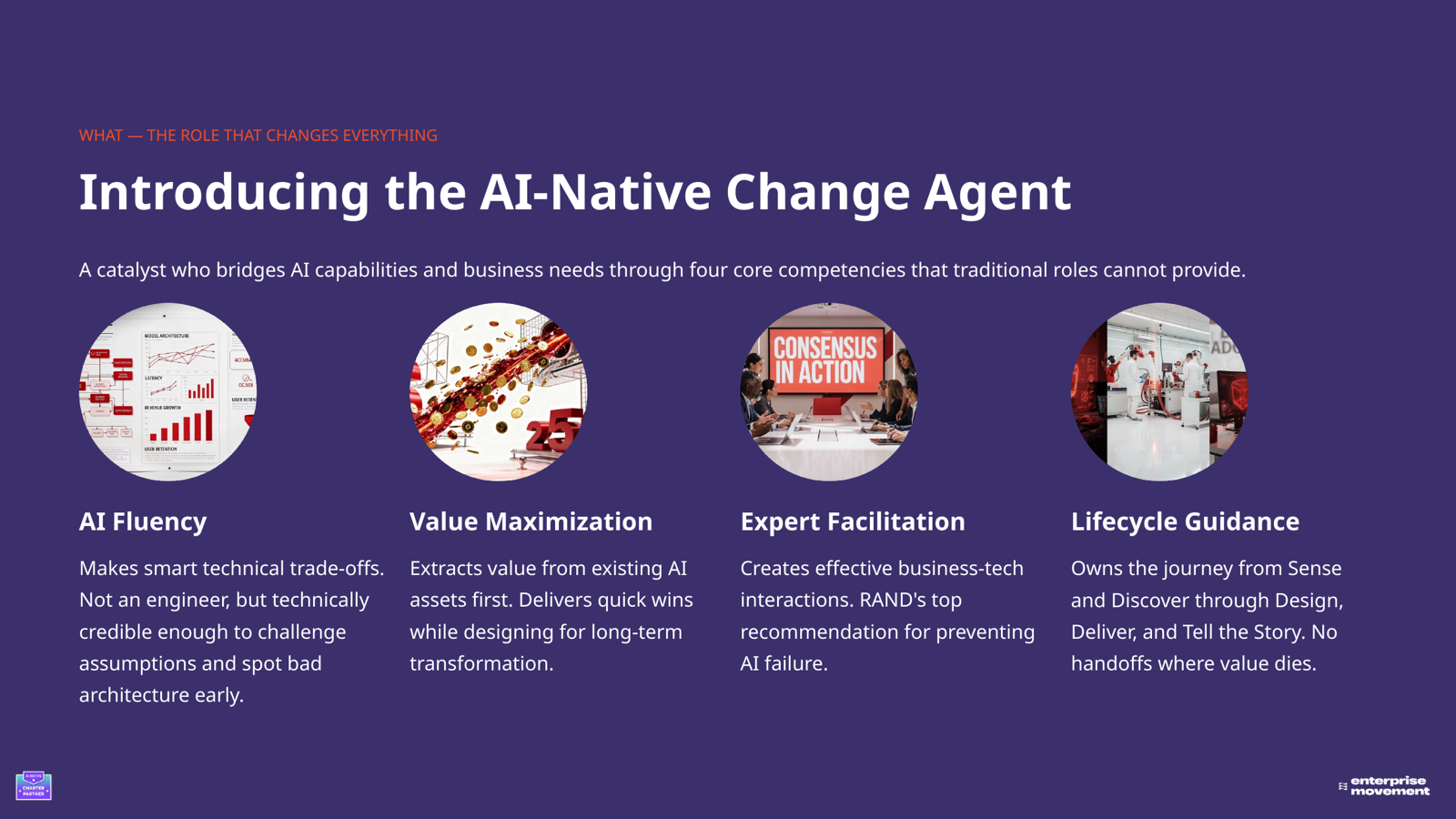
The AI-Native Value Architect is not just a technical expert and not just a delivery lead. It is a role designed to bridge AI capability and business need through four combined competencies.
For organizations that want to build this capability deliberately, Enterprise Movement Academy's AI-Native Value Architect training is closely aligned with this challenge: it is built around helping practitioners guide real AI initiatives from pilot to production impact, align business and technical leaders, and establish repeatable success patterns across the enterprise.
Four Capabilities That Change the Outcome
- AI fluency — enough understanding of AI systems and trade-offs to guide credible decisions
- Value maximization — a focus on extracting the highest business value from existing investments first
- Expert facilitation — productive conversations between business and technical stakeholders
- Lifecycle guidance — ownership from opportunity framing through adoption and value storytelling
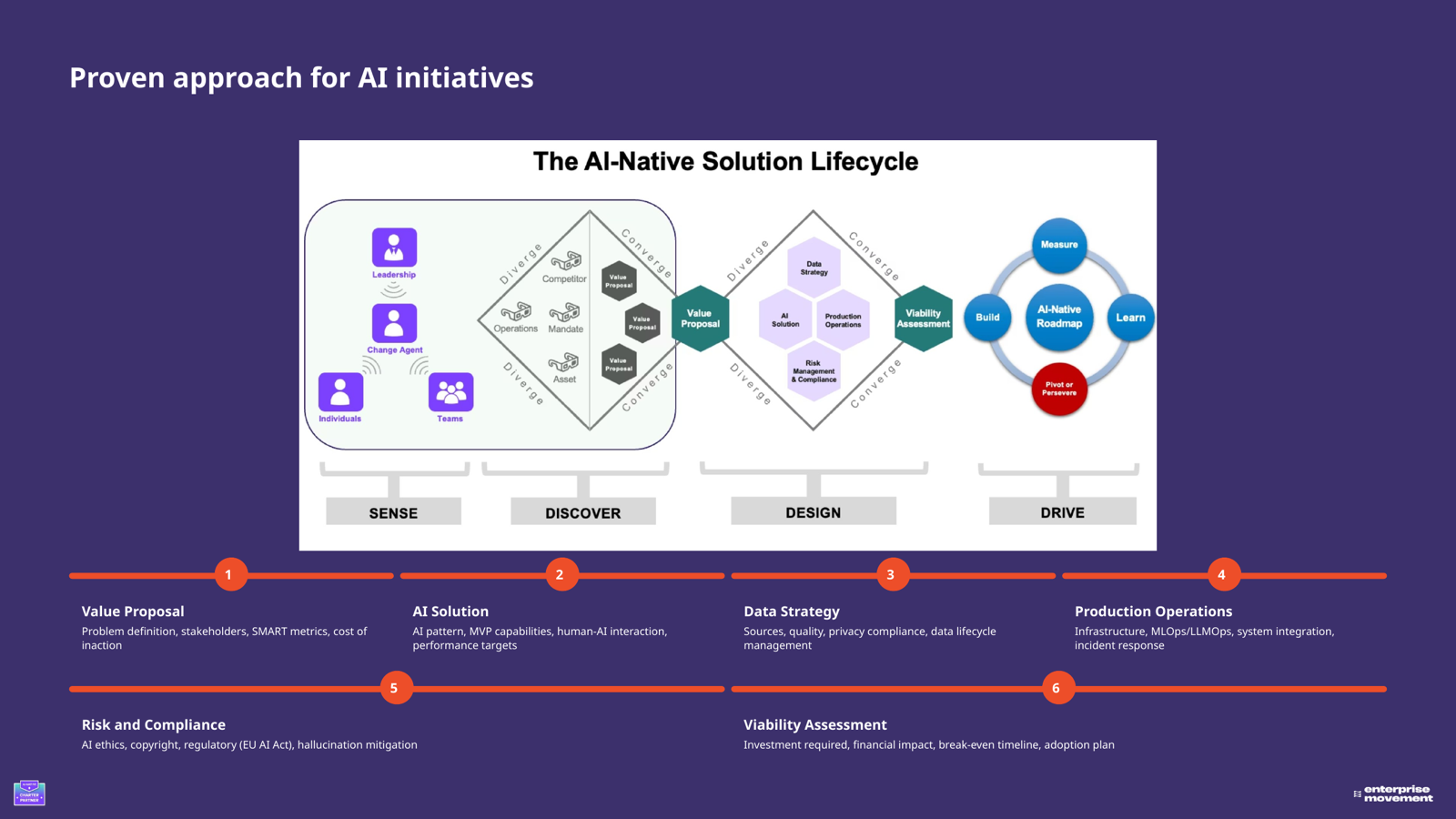
AI initiatives should not be measured only by whether they were delivered. They should be measured by whether they created business value, gained adoption, and can scale.
Series: Stop Wasting Your AI Investments